Aug 17, 2022

Le Saviez_Vous

La couronne atef (désignée couronne du Haut Kemet), était aussi la couronne signifiante d'Ausar (la divinité qui représente Dieu demeurant dans l'homme). Comme toutes les couronnes kémétiques, elle était basée sur des coiffures traditionnelles d'Afrique intérieure. La couronne atef symbolisait la forme conique de la glande pinéale, la partie du cerveau considérée comme le transmetteur de la conscience divine.


Aug 16, 2022

African Renaissance

Reminiscence of African wealth. The african renaissance is about independence energetic, creation of wealth, education. modernisation agricole. 
.
The African Renaissance is the rediscovery of African civilizations, antiquities and humanity. Egyptian kingdoms, Gao, Ghana, Songhai, Dongo, Tio, Kongo

This rebirth begins with a change of mentality, of heart, this rebirth begins with a new perception of ourselves, we are no longer the product of white historians, but the product of our own history and our origins. We are the sons of the sky, a vital energy, the Ntu, Mutu Nyama.

The African renaissance is first of all a cultural revolution, a change in our deviant practices,

The African renaissance is banking on an agricultural revolution. e It is an industrial, economic and artistic development, it begins with our economic and manufacturing independence. The African Renaissance is part of the ancient textual corpus, through our axiology: humanity, respect and dignity.

The gigantic monuments, the sumptuous sculptures, the different domains areasof the falcon, the crocodiles, the fish, the panthers and the eagles, the epic of the rpois and the queens, and the princesses.

The development of science and medicine as in Kom Ombos, the development of music, African music theory, the opening of art schools, the development of an Olympian spirit The fight)

Mathematics, teaching of human sciences, history of pharaohs, kings and queens, scholars, Egyptian universities, Timbuktu, Euclidean geometry and Paul Gerdes, Kongo cosmogam:Dikenga.

An urbanization integrating production units, public squares, streets, a strong economy, bookstores. DBCOpera, list of plays, indigenous, Islamic and Christian art.

The ultimate goal is to be a dominant, prosperous and conquering civilization. We must stat to live according the principle of  living up to their principles of self-reliance, especially in terms of education (Seshat) and manufacturing (Ptah).

Ptah, also spelled Phthah, in Egyptian religion, idea power of maker of things, a patron of craftsmen, especially sculptors; his high priest was called “chief controller of craftsmen.” The Greeks identified Ptah with Hephaestus (Vulcan), the divine blacksmith.
http://myarmoury.com/talk/viewtopic.32885.html

SSeshat idea power of  inventing writing., of accounting, architecture, astronomy, astrology, building, mathematics, and surveying. Seshat, depicted in a leopard skin, inscribing the years of reign for the king on the palm-leaf rib hieroglyph for "year"

_//_//_//_

La Renaissance africaine, c'est la redécouverte des civilisations africaines, des antiquités et de l'humanité. des royaumes égyptiens, Gao, Ghana, Songhaï, Dongo, Tio, Kongo

Cette renaissance commence par un changement de mentalité, de cœur, cette renaissance commence par une nouvelle perception de nous-mêmes, nous ne sommes plus le produit d'historiens blancs, mais le produit de notre propre histoire et de nos origines. Nous sommes les fils du ciel, une énergie vitale, le Ntu, mutu nyama.

La renaissance africaine est d'abord une révolution culturelle, un changement de nos pratiques déviantes,

La renaissance africaine mise sur une révolution agricole. e C'est un développement industriel, économique et artistique, il commence par notre indépendance économique et manufacturière. La Renaissance africaine s'inscrit dans le corpus textuel antique, à travers notre axiologie : humanité, respect et dignité.

Les monuments gigantesques, les sculptures somptueuses, les différents domaines du serpent, du faucon, des crocodiles, des poissons, des panthères et des aigles, l'épopée des rpois et des reines, et des princesses.

Le développement de la science et de la médecine comme à Kom Ombos, le développement de la musique, du solfège africain, l'ouverture des écoles d'art, le développement d'un esprit olympien Le combat)

Mathématiques, enseignement des sciences humaines, histoire des pharaons, rois et reines, érudits, universités égyptiennes, Tombouctou, géométrie euclidienne et Paul Gerdes, instagram Kongo.

Une urbanisation intégrant des unités de production, des places publiques, des rues, une économie forte, des librairies. Opéra, liste de pièces de théâtre, indigène, islamique, chrétienne.

Le but ultime est une civilisation dominante, prospère et conquérante.
Vases


 Textiles

The renaissance of the wrestle


Kora instrument 


https://www.reddit.com/r/SWORDS/comments/5uoi3o/various_african_swords/Floral

The lotus and manioc leaf 

le Lotus et ses Errances.

Comme de nombreuses erreurs sont nées de la confusion du lotus égyptien avec le nénuphar rose, il est nécessaire de bien les distinguer. Le lotus blanc (Nymphæa lotus) et le lotus bleu (N. cœrulea), qui n'est qu'une variété colorée du premier, ont une feuille en forme de disque, fendue presque en son centre, qui flotte à la surface de l'eau. Le calice n'a que quatre sépales grossiers de couleur vert foncé, qui enveloppent entièrement le bourgeon jusqu'à ce qu'il commence à s'ouvrir. En s'élargissant, les délicats pétales blancs ou bleu saphir offrent un contraste marqué avec les sépales.


Presque toutes les sources kanu du Kongo ont identifié des symboles avec quatre feuilles ou plus (fig. 36) comme des dessins phytomorphes. Ils ont associé les dessins au mot mvuma (fleur), paka -paka calice) lukaya (feuille) et lukaya lu nsaki (feuille de manioc). Ce sont des fleurs stylisées des plantes de manioc, qui ont une grande valeur symbolique pour le kanu : la feuille symbolise le principe femelle, tandis que la racine est une métaphore de l'organe mâle.

Les trèfles (fig 37) représentent le fruit ouvert de la plante n'titi ou mubatakala, dans lequel l'organe mâle, les testicules et l'anus sont reconnus. Pendant la circoncision du pénis. Le jus blanc sécrété par la plante est comparé au sperme. Les initiés sont également amenés à mâcher la racine amère du n'titi pour renforcer les pouvoirs de procréation.


Architecture 


The Luxor Las Vegas is a black pyramid hotel and casino complex located at the southern end of the Las Vegas Strip. Since opening in October 1993, it has come to be seen as a prime example of 1990s postmodernist architecture. The resort's Ancient Egyptian theme is completed by a 110 foot tall replica of the Great Sphinx of Giza outside the pyramid.

With 30-storeys and 11,000 m2 (120,000 sq. ft) of floor space, the Luxor contains the world's largest atrium, capable of holding 2,000 slot machines and 87 table games.

The Luxor was built by Circus Circus Enterprises, with the construction completed in just 18 months, at a cost of $375 million. It was constructed using reinforced concrete, with a steel skeleton at the top to complete the pyramid.

The pyramid contains the Luxor Sky Beam which, at 42.3 billion candela, is the strongest beam of light in the world. Computer-designed, curved mirrors collect light from its 39 xenon lamps and focus them into one narrow and intense beam that is projected into the sky, visible from several hundred miles away.

Now owned by MGM Resorts International, it is the 3rd largest hotel in Las Vegas and the 6th largest in the world. At 350 ft, it is also the tallest pyramid in the US, and the fourth 4th in the world.

https://www.saatchiart.com/sculpture/african-sculpture/feature
COMMENT ÈTAIT L' école autrefois?

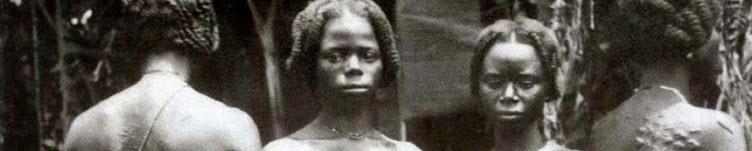
Une sociologie BANTU. Chez les KÒONGÓ, il y a séparation entre hommes et femmes, l’homogénéité recherchée dans l’éducation s’adaptera à cette division de travail ; au fur et à mesure de seront évidemment les premiers formateurs, tout l’entourage les relaiera petit à petit, au fur et à mesure de la croissance… Aussi bien, l’action du père connaît-elle un sursis. Avant les cinq ou six ans, la coutume laisse la garde de l’enfant à la mère. Ce n’est qu’à partir d’alors que le père lui apprendra ce qu’un homme doit connaître : la fabrication des outils de pêche, de chasse, de labour ; le nom des plantes, des herbes et leur emploi… L’enfant apprendra de son père également le nom des bêtes et l’observation de leurs mœurs. Il devra reconnaître les animaux dangereux, les végétaux vénéneux. Le père lui enseignera tout ce qui doit être connu concernant le bétail et les soins à lui donner. Concernant la pêche, par exemple, rien qu’en accompagnant son père, l’enfant verra les différentes nasses (longues, compartimentées), leur mode de dressage, les appâts efficaces, les emplacements favorables. De même, concernant la chasse et le dressage de pièges, il apprendra les différents procédés, les jours de chance… Le père inculque à son fils la connaissance des tabous, les interdits, leurs symboles. Ces tabous portent les uns sur les besoins naturels, les autres sur les valeurs culturelles ou sur les deux à la fois. Parmi les besoins, il y a le problème sexuel. Moins qu’en occident, mais une discrétion existe concernant le domaine sexuel, surtout quand on est entre sexes différents. Entre hommes seuls ou entre femmes, il y a plus de liberté, à moins que le degré de parenté ne s’y oppose. Sur ce sujet, l’ignorance chez les enfants et la fausse pudeur chez les parents n’existent guère. Il n’y a pas de "choux" ni d’achats. y a des euphémismes, mais ils ne sont utilisés qu’entre sexes ou rangs différents, sinon on emploie les termes directs. Enfin, la désignation des repas entre parmi les besoins. Une question que les Africains posent facilement aux maîtres européens est : "est-ce que ça se mange ou non ?". Les non-habitués se formalisent et jugent défavorablement les Noirs. Or pour ceux-ci c’est une règle, un principe de vie. Il y a beaucoup d’interdits portant sur les aliments. Parmi les valeurs, les unes concernent les vivants, les autres les morts. Entre clans différents, il existe des interdits. Même au sein du clan, n’importe qui ne peut pas faire n’importe quoi. On ne peut pas, par exemple, entrer dans le sanctuaire des ancêtres, ni passer derrière la hutte qui abrite cette corbeille…l’exactitude des récits : elle intervient opportunément pour corriger les erreurs que les enfants font en se racontant des contes. L’enfant, au total, entend jour et nuit et introduit dans son cerveau quantité de notions qui n’en sortiront plus, touchant les causes de misère et de maladie, les hiérarchies diverses, les tabous. Mais la mère mettra tout son honneur à initier les filles aux travaux ménagers et à ceux des champs. Les KÒONGÓ présument qu’une fille qui ne sait pas préparer la nourriture ou qui est paresseuse le doit à sa mère. Les références à la mère sont le premier test pour le mariage précoce ou tardif des filles. Naguère le physique de celles-ci comptait peu, en tout cas moins que leurs habiletés. Ces habiletés ne sont un secret pour personne dans le milieu, puisque le père et la mère ne sont pas seuls à éduquer l’enfant. Ils sont très tôt relayés par le clan tout entier qui vise sa survie et sa postérité. son développement harmonieux doivent être à la base de toute éducation ; elle animera toute activité individuelle. » Il ressort ainsi de ce récit que, la division en matière d’éducation intervient à l’âge de cinq ans qui, d’après la tradition KÒONGÓ, est l’âge d’ouverture pour l’enfant dans la connaissance du milieu socio-environnemental dans lequel il évolue. S’agissant du garçon, après quatre ans, il quitte l’univers maternel pour rejoindre celui du père. C’est pour lui la phase du début du discernement et d’appréciation de ce qu’il est. En d’autres termes, c’est le commencement d’une nouvelle vie au cours de laquelle, il va apprendre sa condition d’homme.en se rendant compte qu’il est destiné à assumer certaines responsabilités sociales qui ne seront pas forcément celles des jeunes filles avec lesquelles il aura été dans l’univers féminin quatre années durant. C’est ainsi qu’en réalité pour la tradition KÒONGÓ, l’âge de cinq ans est celui de la transition de l’enfant vers l’affirmation de son être en tant que femme ou homme. Cependant, cette transition tendant vers le discernement de l’enfant qui va précisément consister au développement de ses cinq sens objectifs, c’est-à-dire l’ouïe, l’odorat, le toucher, la vue et le goût exige au préalable que soient développées en lui certaines acquisitions comme l’apprentissage de la langue qui doit très bien se faire depuis le très jeune âge jusqu’à l’âge de quatre ans. douze ans ne parle la sienne…il commence aussi à suivre sa propre voie. Il sait déjà faire du feu, et à son propre foyer où il grille des noix de palme, des chenilles et des grillons comestibles. » Quant à la fille, elle restera dans l’univers féminin, en l’occurrence avec sa mère, qui devra faire de son mieux pour la former à l’acquisition des savoirs et connaissances de la condition féminine.


Aug 15, 2022

The teaching of mathematics in the Renaissance.


The Renaissance was a period of immense transformations within Europe, not the least of which involved a major shift in European educational ideas. During this period, a new way of thinking came to the fore proposing a different form of training, one which would provide the student with skills for life and not just those which were required by their occupation. These views were championed by Humanists who established schools and institutions which implemented these ideas.

Vittorino da Feltre was one of the founders of Renaissance education and his school was arguably the most liberal. The range of subjects available was extensive and Vittorino's aim was that each student should leave with a basic understanding of each, and they should also have received the time and support to study those subjects at which they excelled in greater depth. In particular, selected students were encouraged to concentrate their efforts in the mathematical field, a practise which was not promoted by many other educators. Guarino, whose school was established shortly after Vittorino's, preferred the more classical stance to learning, concentrating heavily on Grammar and Literature, utilising the work of prominent Roman authors as examples. Such subjects as Mathematics and Music were still taught but at a much more elementary level. Other Educationalists, like Palmein, who advised that a greater understanding of Arithmetic and Geometry was necessary, as practical arts and rational disciplines, were criticised. Most held similar opinions to mainstream Humanists; subjects which could not be directly applied to life were of secondary importance and an education which improved knowledge of Latin (allowing for further perusal of the ancient texts) and the art of Oratorio was considered sufficient.

The study of Mathematics in particular was disputed by many, because of its strong association with trade and commerce. Merchants and master craftsmen in many areas in Europe were not given an identical level of respect or deference as they commanded in Germany. This meant that sons of the merchant class were taught only in those subjects which would aid them in their efforts to become statesmen and politicians. What little mathematics was taught in the merchant schools therefore became highly theoretical and divorced from possible applications in the real world.

To cope with this gap in the educational system, another type of school was founded in Florence and its surrounding areas. The Scoula d'abaco taught those who wanted to improve their ability in commercial areas, and hence provided courses in Arithmetic, Algebra, Astronomy, book-keeping, and the more practical elements of Geometry, which were fast becoming important due to recent advances in Navigation.

Advances were being made in other sciences and technologies, the invention of the printing press having the most profound effect on education. This allowed for a rapid dissemination of knowledge with many more people able to afford to purchase books, especially when the practice of printing texts in monthly instalments reduced the price even further. In the beginning, there were insufficient printing presses dealing with mathematical documents but the demand for astronomical charts and commercial tables among society grew, and after the translation of important texts such as 's Elements into German, French and Italian the demand increased.

Not solely the ancient texts, but also the works of more modern mathematicians such as  and others began being printed. In England, Robert  wrote what is thought to be the first series of textbooks in English. These were not intended for the highly educated mathematician but for the common man seeking to improve his understanding of such subjects as the Hindu-Arabic numeral system, conversions between weights and coins, computation with counters which would aid their work in trade and commerce. These subjects were covered in 's first and most successful book The Grounde of Artes which was first printed in 1540, but which was reprinted over fifty times in nearly a hundred and sixty years. 's three other major works The Pathwaie to KnowledgeThe Castle of Knowledge and The Whetstone of Witte were not so popular. This is most likely due to their less practical and more advanced contents.

Characteristic of most of 's texts is his question and response style of writing. This is very close to the teaching style used during the Mediaeval Ages, but it was obviously beginning to be recognised as inadequate by , since he counselled against using a similar style in the classroom because of its limitations. He did not, however, explicitly propose any other method. The Pathwaie is the only one of 's four books not written in this dialogue style. It is considered almost as an abridged version of Euclid's Elements with many of the Latin terms replaced with English equivalents of 's own devising. This caused much criticism and later versions of Pathwaie returned to the originals. A German attempt to replace the Latin terminology was successful although why one was accepted but the other was not, remains a mystery.

Around the middle of the sixteenth century,  proposed that in France the Arts courses taught at universities should return to the seven classical liberal arts, but with the syllabus more based on applied topics. He developed "method" as a pedagogical concept taking theory towards that required for practical problems. He proposed to reorganise the seven liberal arts using the following three "laws of method":-
(i) only things which are true and necessary may be included;

(ii) all and only things which belong to the art in question must be included;

(iii) general things must be dealt with in a general way, particular things in a particular way.
Using this approach  worked on many topics and wrote a whole series of textbooks on logic and rhetoric, grammar, mathematics, astronomy, and optics.

The existence of textbooks like those of  and  and others, and the reduced cost of purchasing books (thanks to the printing press) caused an increasing interest in the sciences, not only amongst the wealthy but also amongst the middle class. Knowledge of certain mathematical skills and techniques beyond what was available in most schools was becoming more important, especially in the towns and cities. It was soon possible for people to earn a living as a private Mathematics tutor for those with enough money, or as a Mathematics practitioner similar in style to the scriveners of previous centuries. Those with more money either became academics or amateur mathematicians, many of whom often made considerable advances in both the subject and its place in education.

, one of the editors for The Grounde after graduating from Cambridge with both a BA and an MA and later lecturing at the University of Paris on sections from 's books, wrote of the need for improving the place of Mathematics in Education. He argued that Mathematics should be studied, not only for its practical use (of which there was still too little), but also for its ability to 'lift the heart to the heavens' which is reminiscent of Pythagorean beliefs. He proposed translating currently available mathematical texts into English, in order to aid the spread of knowledge to those who had not spent years learning Latin at school and University and who found studying the texts in the original language difficult.  himself helped to translate 's Elements into English and this was then published in 1570, eighty-eight years after it was published in Latin.

Sir John Cheke, the first Professor Regius of Greek at Cambridge, also made attempts to study more advanced Mathematics including much of 's work and then to pass on his knowledge to others at the University, the majority of whom became tutors at court. Few other professors made any significant efforts in this direction. The Edwardian Statues of 1549 at Cambridge did try to improve the situation by laying down that all freshmen were to be taught Mathematics at foundation level as part of a liberal education. It recommended textbooks including  and  (whose De Arte Suppletandi of 1522 was very much based on the academic style found in Italy and hence of little use to the merchant classes) along with 's Geometry and Astronomy. These Statues were removed only twenty-one years later during the reign of Elizabeth I, because the commissioners believed that Mathematics was applied to the practical life and was therefore more part of a technical education than that which should be provided at the University.

The two Universities of Oxford and Cambridge were no longer alone in Britain. The 14th and 15th centuries saw the foundation of over 50 new universities across Europe, including three in Scotland alone. A University at St Andrews was founded in the early 15th century because of problems posed by sending the most advanced students of the Grammar and Cathedral schools to the University of Paris and France's transferral of allegiance to the Roman Pope. Universities in Glasgow and Aberdeen soon followed. These three were very much in the same style as the Parisian University and followed the mediaeval syllabus, where subjects in the Quadrivium were considered to be useful only as training for what was soon to be considered the more important subjects at university: Natural, Metaphysical and Moral Philosophy.

This Mediaeval curriculum, and the structure of the Universities, were revised shortly after the Reformation. Andrew Melville, one of the supporters of the ideals presented in the Book of Discipline, was offered the principalships of both St Andrews and Glasgow following his return from Paris and Geneva. At this time Glasgow was in greater need, having few students and little money. The improvements that both Andrew and his nephew James made were considerable. They introduced the study of Greek for the first time in Scottish universities and the extended curriculum included lectures on Arithmetic, Geometry, and Mathematics which were given predominantly by James. The University structure was changed and the practice of teaching first year students all of their courses by the Regent was removed. In 1597 Andrew Melville was forcibly removed to St Andrews which too enjoyed a New Foundation and a short golden era of advancement. These reforms did not remain in place and by the middle of the 17th century the Universities had reverted to the old Mediaeval system. This remained in place until the middle of the 18th century.

The Reformation and the First Book of Discipline highlighted the failings of education in Scotland. Where some form of teaching was available it was usually provided by the Church, but in 1549 the Provincial Council accused cloistered schools of their 'crass ignorance or literature and all liberal arts'. The larger towns and cities fared better with almost all the burghs of any size containing a Grammar school (many of which were already over a century old) by 1560. However, the more rural areas of Scotland were often left with no form of education available at all, excepting small and poorly run schools where letters and reading might be taught. In what was later called the First Book of Discipline, the 'six Johns' chosen by the Privy Council included two chapters, specifically dedicated to education. Here they laid out detailed plans for the Universities, and guidelines proposing advances for school level education. Some of the most fundamental points included the requirement that every church should appoint a schoolmaster of some ability, and that the poor should also be educated, regardless of whether or not they intended to follow a career in the Church.

The overall effect of the Reformation in Scotland was a general improvement in the standards of education available, and a marked increase in the number and placement of schools. Much of this did not happen until the 17th century, however, and it did cause great disruption to the educational system in the late 16th century. The disruption caused by the Reformation to the Church, meant that many who would have progressed into further education and who would then have been sponsored at University chose not to do so. As a consequence, the enrolment at Glasgow and St Andrews dropped to almost nil in 1560, jeopardising their very existence. Schooling was also disrupted when rioting destroyed cathedrals and churches, with the buildings close to these structures. These specific buildings had previously housed the schools and now there existed no other suitable buildings in the area which could offer the same. However, these problems were only temporary, and Andrew Melville's work did much to restore the ailing Universities.

Article by: J J O'Connor and E F Robertson based on a University of St Andrews honours project by Elizabeth Watson submitted May 2000.

Paulus Gerdes Mozambique's Ethnomathematics Research Project (MERP), MOZAMBIQUE

Paulus Gerdes
Mozambique's Ethnomathematics Research Project (MERP), MOZAMBIQUE

98-gerdesThe rich cultural diversity of Africa is clearly visible in the wide range of house decorations, of architectural styles and of settlement and enclosure shapes. Unity within this diversity appears in the importance of the artistic and geometrical exploration of symmetrical forms and patterns. Shapes and decorations are not static: they may vary with the seasons, mark changes in the family composition or be chosen for special ceremonies. Some traditional African architectural ideas may have been derived from or suggested by experience and knowledge in other cultural spheres, such as basketry.

Among the Ngongo, one of the ethnic-cultural groups of the Kuba Kingdom in central Congo/Zaire, the decoration of the walls of the houses and palaces with mat work was widespread. The plane patterns have various symmetries. Horizontally one sees the sticks which are woven together by the vertical lianas. The use of architectural mats is one way to change decorations in agreement with the season, ceremony or life cycle.

In Lesotho and neighboring zones of South Africa, Sotho women developed a tradition of decorating the walls of their houses with designs. The walls are fist neatly plastered with a mixture of mud and dung, and often colored with natural dyes. While the last coat of plastered mud is still wet, the women engrave the walls, using their forefingers. Their art is seasonal: the sun dries it and cracks it, and the rain washes it away. The entire village is redecorated before special religious celebrations such as engagement parties and weddings. The Sotho women call their geometric patterns litema. Symmetry is a basic feature of the litema patterns. They are normally built up from basic squares. The Sotho women lay out a network of squares and then they reproduce the basic design in each square. Of then the symmetries are two-color symmetries: horizontal and vertical reflections about the sides of the squares reverse the colors.

The correct citation for this paper is:
Paulus Gerder, "On Some Geometrical and Architectural Ideas from African Art and Craft", pp. 75-86 in Nexus II: Architecture and Mathematics, ed. Kim Williams, Fucecchio (Florence): Edizioni dell'Erba, 1998.
Michael J. Ostwald
School of Architecture and Built Environment
Faculty of Engineering and Built Environment
University of Newcastle
New South Wales, AUSTRALIA 2308
98-ostwaldIn September 1995 the Australian architectural practice Ashton Raggatt McDougall (ARM) invited the eminent mathematician Roger Penrose to open their soon-to-be-completed refurbishment of the historic Storey Hall complex of buildings at the Royal Melbourne Institute of Technology. Penrose, who admitted that the design seemed "extremely exciting", regretfully declined on the grounds that he was already overcommitted to many projects to visit Australia at the required time. He concluded his response to the invitation with an enigmatic postscript which records that he is currently working on "the single tile problem" and recently "found a tile set consisting of one tile together with complicated matching rule that can be enforced with two small extra pieces". This postscript contains the first clue to understanding the mysterious connection between Penrose and Storey Hall, between a scientist and a controversial, award-winning, building.

Storey Hall is significant for many reasons but only one prompted ARM to invite Penrose to open it. The newly completed Storey Hall is literally covered in a particular set of giant, aperiodic tiles that were discovered by Roger Penrose in the 1970's and have since become known as Penrose tiles. While architecture has, historically, always been closely associated with the crafts of tiling and patterning, Storey Hall represents a resurrection of that tradition.

But what is Penrose tiling and what does it have to do with architecture in general and Storey Hall in particular? This paper provides an overview of the special properties and characteristics of Penrose's tilings before describing the way in which they are used in ARM's Storey Hall. The purpose of this binary analysis is not to critique Storey Hall or its use of aperiodic tiling but to use ARM's design as a catalyst for taking the first few steps in a greater analysis of Penrose tiling in the context of architectural form generation.

ABOUT THE AUTHOR
Michael J. Ostwald is Dean of Architecture at the University of Newcastle, Australia. He has lectured in Asia, Europe and North America and has written and published extensively on the relationship between architecture, philosophy and geometry. He has a particular interest in fractal, topographic and computational geometry and has been awarded many international research grants in this field. Michael is also Co-Editor of the journal Architectural Design Research and was previously Book Review Editor of the Nexus Network Journal.

The correct citation for this paper is:
Michael J. Ostwald "Aperiodic Tiling, Penrose Tiling and the Generation of Architectural Forms", pp. 99-111 in Nexus II: Architecture and Mathematics, ed. Kim Williams, Fucecchio (Florence): Edizioni dell'Erba, 1998.
Gert Sperling
Lerchenweg 3
34233 Fuldatal, GERMANY

98-sperlingThe Pantheon complex has been the object of countless interpretations. There is no certainty as to how and why it was created and what it is meant to express, because there are no documents concerning the identity of the architect, the exact dates of conception, its origin or its function. Since ancient times we find vague references to its symbolic function: according to Dio Cassius, it resembles the heavens. But the cosmological interpretations do not take into consideration the real metrical dimensions of the whole complex nor the relation between its numbers, shapes, forms and proportions. Even the modules are identified very differently, so that it is difficult to compare the various analyses.

Some scholars take the Neopythagorean roots of the Pantheon seriously, interpreting the architecture as an integrated visualization of the Greek mathematically-conceptualized theory of the cosmos, which consisted of an amalgamation of cosmological, geodetical and anthropomorphical dimensions. To generate harmony, the laws of arithmetic, geometry, astronomy and musical proportions are fused. The pantheon can be considered an architectural image of the Pythagorean cosmos, a "living organism" with a mathematically-proportioning "soul" and unchanging, "eternal" consonant-symphonic ratios. It "resembles the heavens", but is a resemblance based on mathematical knowledge, a summary of the ancient quadrivium.

ABOUT THE AUTHOR
Presbyterian minister Gert Sperling has researched topics concerning the Pantheon for over thirty years. He is well known from his many reports on the subject. His most complete work is his book, Das Pantheon in Rom: Abbild und Mass des Kosmos (Munich/Neuried: ars una Verlag, 1999).

The correct citation for this paper is:
Gert Sperling, "The Quadrivium in the Pantheon of Rome", pp. 127-142 in Nexus II: Architecture and Mathematics, ed. Kim Williams, Fucecchio (Florence): Edizioni dell'Erba, 1998.
Graziella Federici Vescovini
Università degli Studi di Firenze, ITALY

98-vescoviniOne of the single most important ideas emerging from Alberti's concepts is that of the relationship between the artist's ingenuity and his natural and social surroundings, that is, the relationship between the world and the artist's representation of it. It has been noted that this concept resonates singularly with that of Nicholas of Cusa, with whom Alberti shared mutual friendships. The idea of the creativity of the artist's mind, including thoughts on his relationship to the world around him, his capacity to harmoniously reconstruct in accordance with innate proportions (the mind is the locus of proportion, Nicholas wrote) and the beauty of discordant, contradictory Nature, is clearly developed in De Mente and other works anterior to 1450, when Alberti labored over De re aedificatoria. Nicholas' idea of the architectonic vis of the human mind finds a singular consonance with Alberti's vis compositionis, according to which the artist imitates the divine ars in recomposing the contradictions, irregularities and even monstrosities of the world. Neither Nicholas nor Alberti presents the concept of the relationship between the artist and the world around him as something tranquil and objectively given, but rather as a continuing tension. It is a personal conquest by the artist's ingenuity that corrects and upholds the mira vis creatrix of nature. In part, the painter must draw out of nature the beauty that certainly exists but is not always apparent, and in part he must be capable of drawing it out of himself.

The correct citation for this paper is:
Graziella Federici Vescovini, "Nicholas of Cusa, Alberti and the Architectonics of the Mind", pp. 159-171 in Nexus II: Architecture and Mathematics, ed. Kim Williams, Fucecchio (Florence): Edizioni dell'Erba, 1998.
Michele Emmer

98-emmerAll of us feel we have an exclusive and privileged relationship with Venice. We all feel that a particular bridge, a certain street, a hidden corner of the city is only for us, that we have discovered it, that no one else knows about it. Each of us has a special memory of the city on the water. From 1976 to 1990 I made 18 films in a series on Art and Mathematics. Several of them were made in Venice, at least in part. Being films, they had a strong visual element and there I had to ask myself the basic question: are there objects, places or works of art in Venice that are of mathematical and of architectural interest? The answer of course is yes, at two different levels. As the city-theater par excellence, one has only to move around to discover that the architectural structures--palaces, streets and squares--have geometrical and mathematical shapes of some importance.

There are specific elements in Venice that are of special interest to the history of mathematics: polyhedra, symmetry, spirals and labyrinths. Add to this the fact that some of these works of scientific interest were carried out by great artists of the Renaissance and one realizes that it is not altogether far-fetched to think of Venice when dealing with the mathematics of art and architecture.

The correct citation for this paper is:
Michele Emmer, "La Venezia Perfetta: the Geometry of the City", pp. 39-50 in Nexus II: Architecture and Mathematics, ed. Kim Williams, Fucecchio (Florence): Edizioni dell'Erba, 1998.
Marco Frascari
Virginia Tech, USA  

Livio Volpi Ghirardini
Mantua, ITALY
98-frascariAre architectural proportions metric, numeric, geometric or golden? Which ones among the many in a building are the markers that should be considered reference points for the proportioning of its parts? A golden or divine magnifying glass that distorts rather than clarifies has been applied to everything in the name of aesthetic and mystical impulses. A proportion called the Golden Mean has long been the only explanation for a successive melange of proportions in all the visual arts. This Golden Mean (also called the Divine Proportion) has been found repeatedly in the pictures of growth patterns embodied in natural events or in the pictures of human products. Since the last century it has so fascinated mathematicians and artists that is is proposed by many as the absolute aesthetic value.

By tracing lines onto pictures, this ideal proportion has been found in man-made artifacts and used to mark human achievements. As the acme of his mystically scientific process, pictures of the Parthenon with Golden sections traced on them have been exhibited as demonstrations of the beauty of its man-made, but nature-inspired, rational design. This graphic notion of beauty is so alluring and pervasive that it has been acritically forced upon us as an aesthetic paradigm since grade school.

The German, Apollonian search within the combined sciences of mathematics, philosophy and archaeology lies at the root of the scientific proposal of the Golden Mean as a panacea for explaining the composition of parts and foretelling the aesthetic future of man-made designs. German philosopher Adolf Zeising has made the Golden Mean the only possible principle of a scientific aesthetic and used the Parthenon with the usual diagram traced on it to provide the necessary archaeological authority for his theory of the omnipresence of the aesthetic guarantor phi. In 1876, in a ponderous article published in memory of Zeising, mathematician Siegmund Gunter reviewed Zeising's scientific aesthetics in a critical manner, but even he admitted that the presence of phi in ancient architecture, and notably in the Parthenon, was clear evidence of its being the powerful quintessence of classical aesthetic values. Without any doubt Zeising and Gunter were very skillful at measuring pictures, but it is clear that neither of them had ever measured a building following to tectonic principles.

The correct citation for this paper is:
Marco Frascari and Livio Volpi Ghirardini, "Contra Divinam Proportionem", pp. 65-74 in Nexus II: Architecture and Mathematics, ed. Kim Williams, Fucecchio (Florence): Edizioni dell'Erba, 1998.

Poterie motifs et designs


Aug 12, 2022

Le Saviez-Vous?

 Kongo Dya Ntotila or Bundu Dia Kongo..

Aug 8, 2022

Mode bajag

 Retour à  la terre.


Aug 4, 2022

Style Bajag punu

Le style cow-boy 

Les punu ont toujours aimés leurs terres et leurs bétails
Pierre Maganga Moussavou en mode Bajag en toute élégance.


Iliona Blanc la star Punu aux USA